In modern vehicles, air conditioning has become an essential feature rather than a luxury. Especially in hot climates, a properly working car AC system ensures comfort, safety, and a pleasant driving experience. However, like any mechanical system, car air conditioners can develop problems over time. Understanding car AC repair helps vehicle owners detect issues early and avoid costly damage.
This article provides a complete guide to car AC repair, including how the system works, common problems, repair methods, and maintenance tips.
How a Car AC System Works
A car air conditioning system operates by removing heat and humidity from the air inside the vehicle. It works through a closed-loop system that circulates refrigerant gas.
The main components include:
- AC Compressor – Pressurizes and circulates refrigerant
- Condenser – Releases heat outside the vehicle
- Receiver Dryer – Filters moisture and contaminants
- Expansion Valve – Controls refrigerant flow
- Evaporator – Absorbs heat from cabin air
- Blower Fan – Pushes cooled air into the cabin
When the AC is turned on, refrigerant moves through these components, converting hot air into cool air that flows inside the car.

Common Car AC Problems
Car AC systems often show warning signs before complete failure. Recognizing these symptoms early can save time and money.
Weak or No Cooling
This is the most common AC complaint. The main causes include low refrigerant level, gas leakage, or a failing compressor.
AC Gas Leakage
Leaks may occur in hoses, joints, or the evaporator. Gas leakage reduces cooling efficiency and can damage the compressor if ignored.
3. Compressor Failure
The compressor is the heart of the AC system. If it fails, the entire system stops cooling. Common causes include lack of lubrication or contaminated refrigerant.
4. Blocked Condenser
Dust, mud, and insects can block the condenser, preventing heat dissipation. This causes poor cooling, especially during traffic or high temperatures.
5. Bad Smell from AC Vents
A foul odor usually indicates bacterial growth on the evaporator or a clogged cabin filter.
6. Low Airflow
Weak airflow is often caused by a damaged blower motor, blocked air vents, or dirty cabin air filters.
Car AC Diagnosis Process
Professional AC repair always begins with proper inspection. The standard diagnostic process includes:
- Visual inspection of hoses and connections
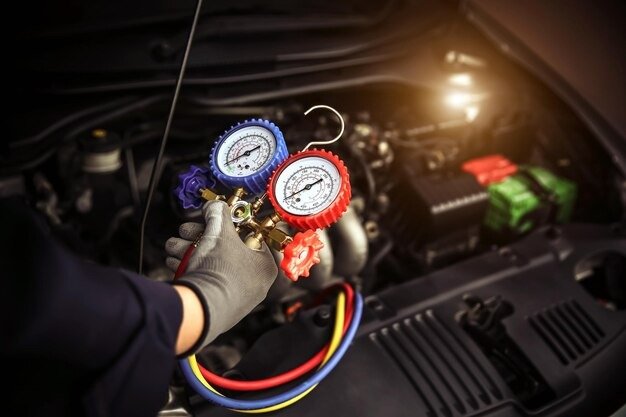
- Checking AC pressure using gauges
- Leak detection with UV dye or electronic tools
- Compressor performance testing
- Electrical system inspection
- Temperature measurement at vents
Accurate diagnosis ensures only faulty components are repaired or replaced.
Car AC Repair Methods
Depending on the issue, different repair methods are used.
AC Gas Refill
If refrigerant is low, the system is vacuumed and refilled with the correct type and amount of gas. Overfilling or underfilling can reduce cooling.
Leak Repair
Leaks must be repaired before gas refilling. This may involve replacing O-rings, pipes, or evaporator components.
Compressor Repair or Replacement
Minor compressor issues can sometimes be repaired, but severe damage requires complete replacement.
Condenser Cleaning
High-pressure washing removes dirt and improves heat exchange efficiency.
Evaporator Service
Evaporator cleaning or replacement is done when cooling smells bad or gas leaks repeatedly.
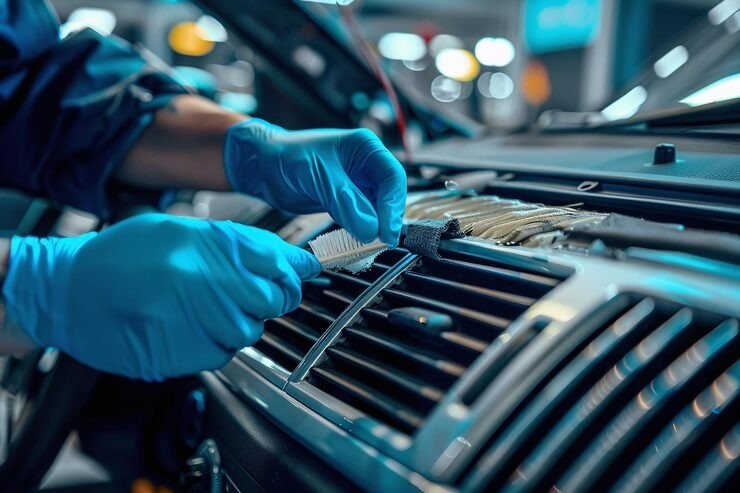
Cabin Filter Replacement
Replacing the cabin filter improves airflow and air quality inside the vehicle.
Cost of Car AC Repair
Car AC repair cost depends on the nature of the fault:
- Gas refill – Low cost
- Hose or seal repair – Medium cost
- Compressor repair – Higher cost
- Compressor replacement – Expensive
- Evaporator replacement – High labor cost
Early repair always reduces overall expense.
Importance of Regular AC Maintenance
Routine maintenance keeps the AC system efficient and extends component life. Neglecting small issues often leads to major failures.
Benefits of regular maintenance include:
- Better cooling performance
- Reduced fuel consumption
- Longer compressor life
- Cleaner cabin air
- Lower repair costs
Experts recommend AC inspection at least once every six months.
Tips to Maintain Car AC Performance
- Run the AC at least once a week
- Clean the condenser regularly
- Replace cabin filter on schedule
- Avoid using low-quality refrigerant
- Do not operate AC with engine overheating
- Park the car in shade when possible
These simple habits significantly improve AC durability.
Can You Repair Car AC Yourself?
Basic maintenance such as cleaning the condenser or changing the cabin filter can be done at home. However, professional repair is necessary for:
- Gas refilling
- Compressor work
- Electrical diagnosis
- Evaporator replacement
Improper handling may damage components or cause safety risks.
Why Timely Car AC Repair Is Important
Ignoring AC problems can lead to:
- Compressor seizure
- Increased fuel usage
- Complete system failure
- Expensive replacement costs
Timely repair ensures comfort, safety, and long-term savings.
Conclusion
Car AC repair plays a crucial role in maintaining driving comfort, especially in hot regions. Understanding how the AC system works and identifying early warning signs can prevent major breakdowns. Regular maintenance, professional inspection, and quality parts are key factors in keeping your car’s air conditioning system reliable.
By taking care of small issues early, vehicle owners can enjoy efficient cooling, improved air quality, and a longer lifespan for their AC system.